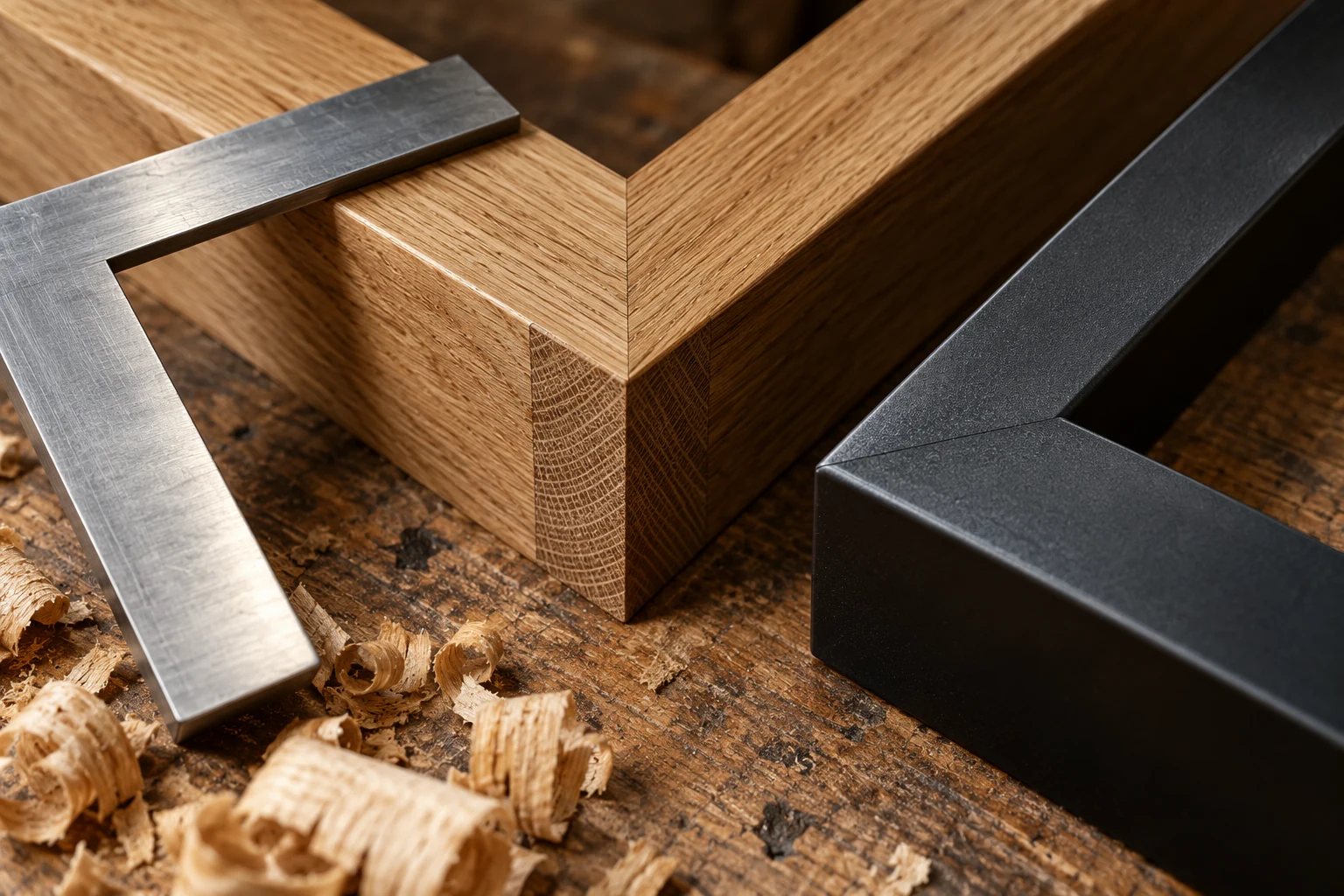
Steel and timber have complementary qualities. Steel spans long distances with slim sections and provides rigidity; timber brings comfort to the touch, visual warmth and ease of repair. Combining them well means thinking about the role of each and how they are joined.
Where the combination works
Some applications where the two materials complement each other:
- Tables and desks with a steel frame and a timber top;
- School furniture with a steel tube frame and plywood seats;
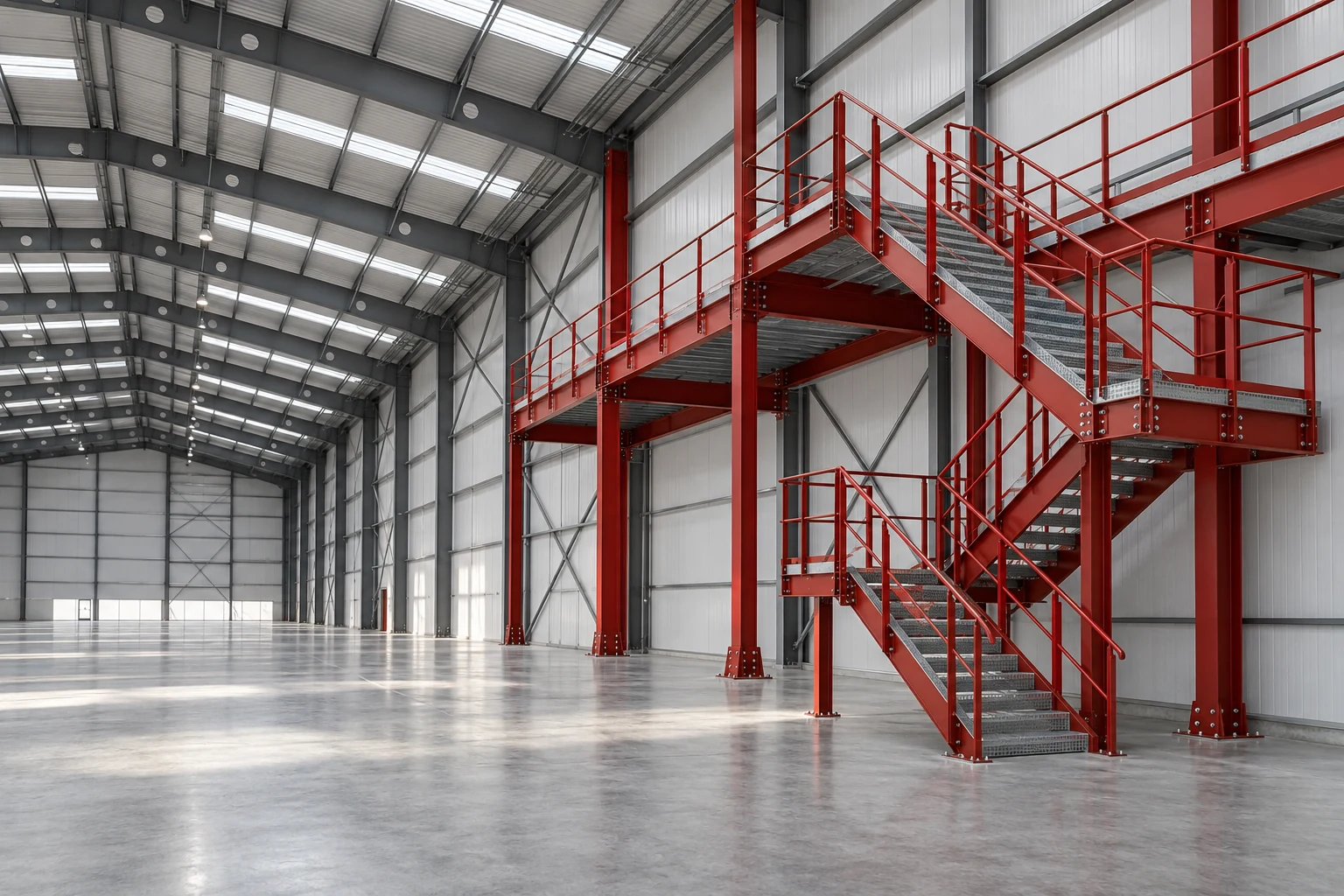
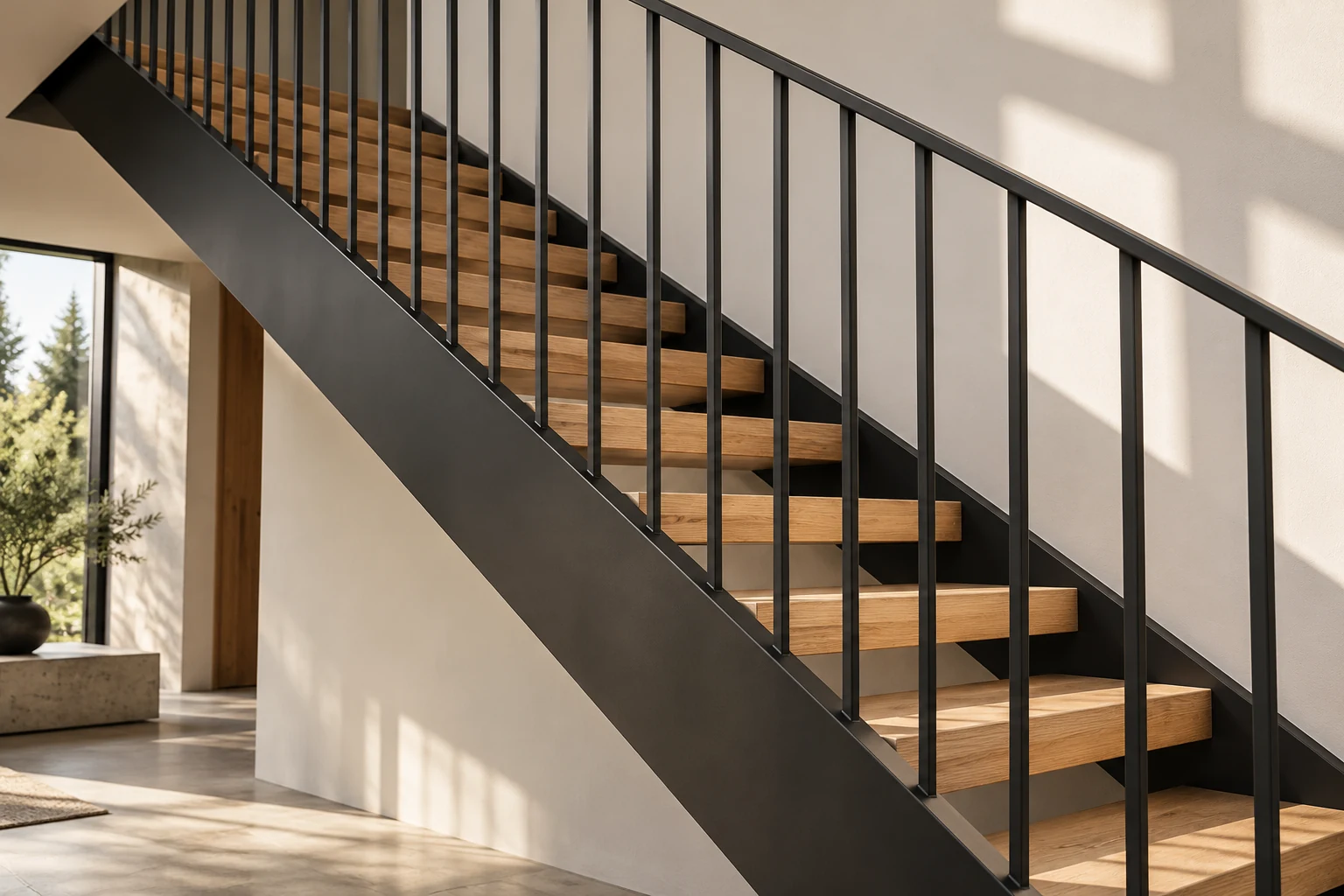
- Stairs with a steel structure and timber treads;
- Pergolas, counters and display units for retail and hospitality.
Each material in its role
As a rule, steel handles the structure and the loads; timber provides the contact surfaces. This division allows lighter, more durable pieces that are easier to maintain.
Connections and movement
Timber moves with humidity; steel hardly does. Connections between the two must allow for this movement, for example with slotted holes or fixings that let the top move. This prevents cracks and warping.
Coordinated finishes
The colour of the steel and the tone of the timber should be chosen together, and each material given a finish suited to its environment: powder coating for steel, varnish or oil for timber.