Guardrails, handrails, grilles and gates look like simple elements, yet few are in closer contact with people or more exposed to the passage of time. A good piece of metalwork is safe on day one and remains safe years later. That is decided at specification stage.
Function first
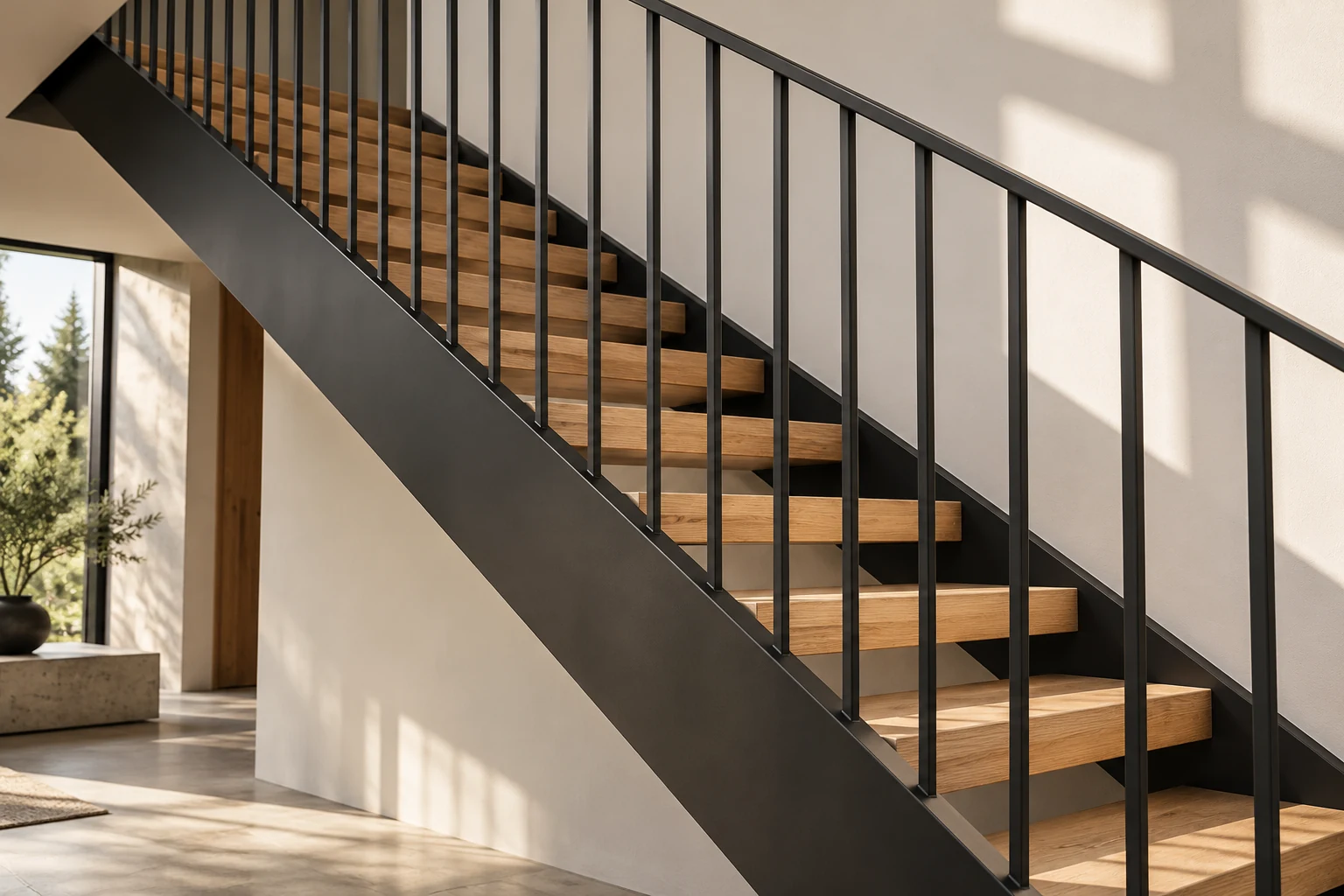
A balcony guardrail prevents falls; a handrail supports people going up and down; a grille protects an opening; a gate controls access. Each function has its own requirements for height, rigidity, openings and strength. Minimum heights and maximum openings must follow the regulations applicable to the building and its use, especially where children or members of the public move around.
Fixings matter as much as the piece itself
Many failures lie not in the metal but in how it was fixed. The substrate (concrete, masonry, steel structure) determines the type of fixing and its spacing. State the type of wall or slab and, if possible, share photos of the site.
Corrosion protection
Unprotected steel corrodes, and the process speeds up with humidity, salinity or pollution. Protection should be chosen according to the exposure environment:
- Hot-dip galvanising, for demanding outdoor exposure;
- Powder coating, with good resistance and a wide range of colours;
- Duplex systems, galvanising plus painting, for coastal or industrial environments;
- Stainless steel, when maintenance must be kept to a minimum.
Details that make a difference
Continuous, well-finished welds, no sharp edges, drainage in tubes and hollow sections so water does not collect, and hardware suited to the weight of gates. These are discreet details that extend service life and reduce maintenance.
How to request a proposal
State the type of element, approximate dimensions, location (indoor or outdoor, distance from the sea), type of substrate and the intended look. Visual references help align expectations.