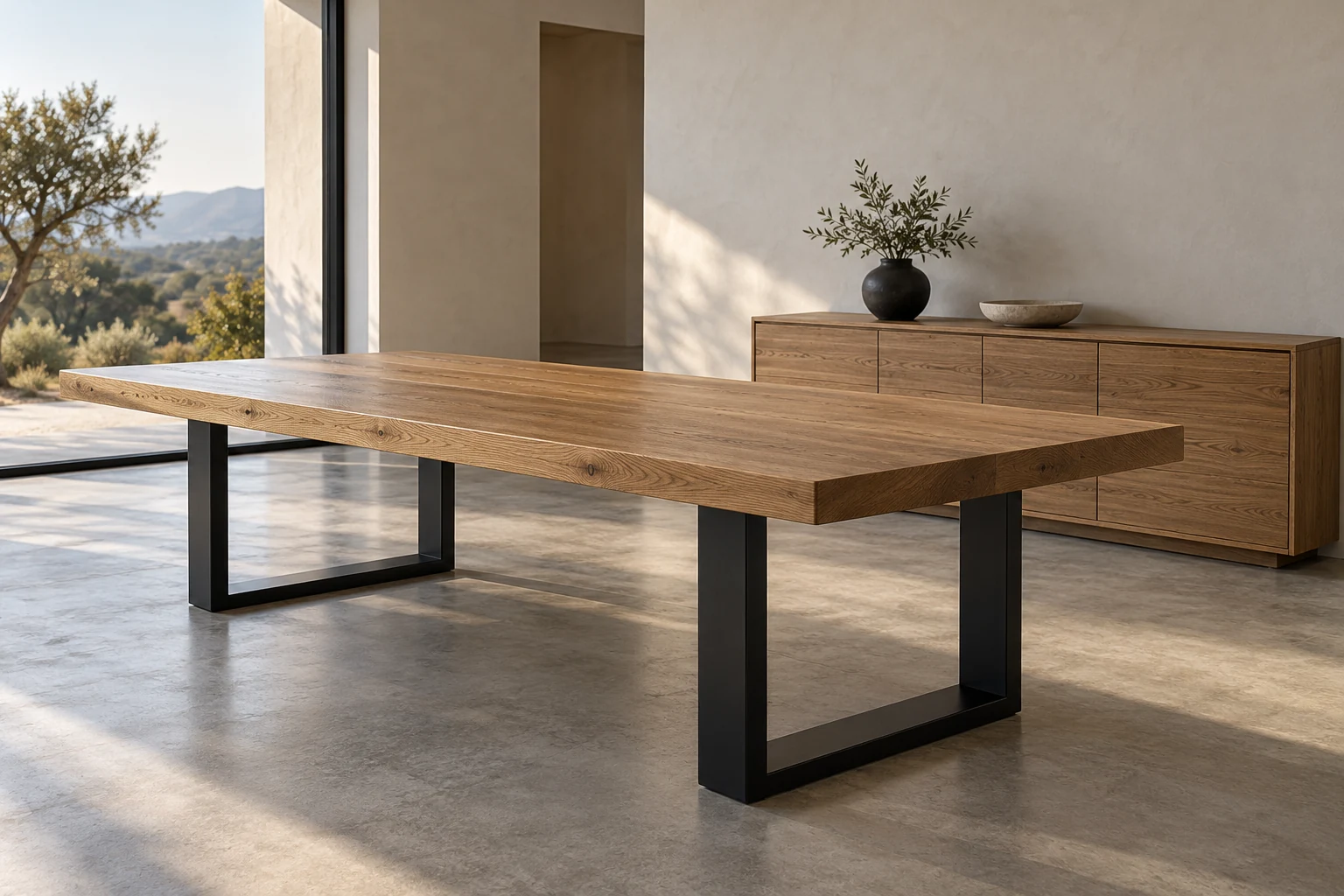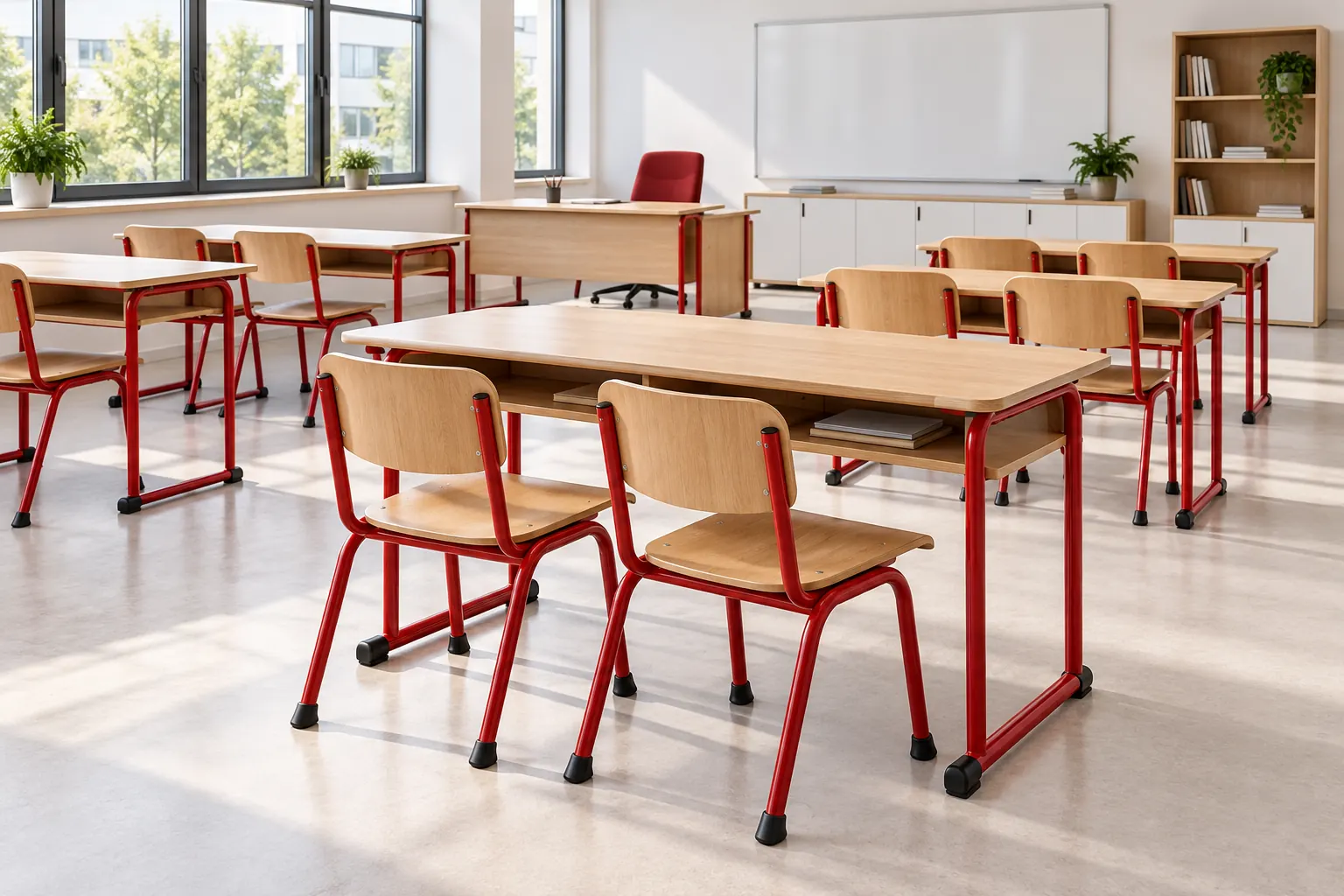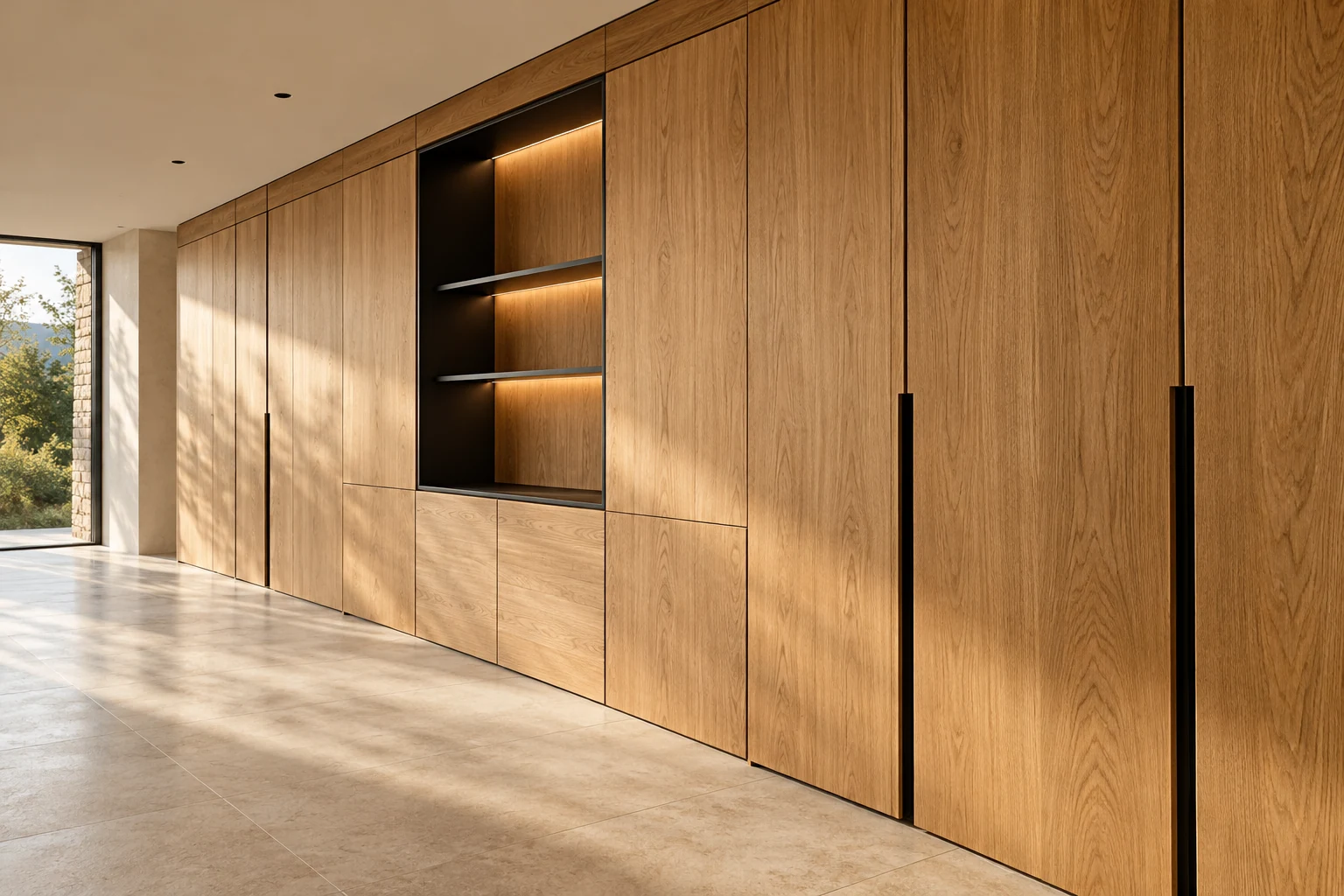
Timber brings warmth and character to a space, but not all timbers and wood-based products respond the same way to daily use. In offices, schools, shops or hotels, the choice of material and finish determines how long a piece keeps its appearance and function.
Solid timber, plywood and panels
Each material has its place:
- Solid timber: strong and repairable, ideal for structural pieces, tops and exposed elements; reacts more to changes in humidity;
- Plywood: stable and strong, good for tops, seats and pieces under load;
- Faced panels (MDF or particleboard with wood veneer or laminate): economical and uniform, suitable for cabinets, fronts and cladding.
Humidity, sun and insects
Timber expands and contracts with humidity. In hot, humid climates, allow for gaps, choose stable materials and seal end grain and edges. Direct sunlight changes the colour of many finishes. And wood-boring insects such as termites call for treated or naturally durable timber and care during installation.
Finishes: protect and make cleaning easier
Varnishes form a tough, easy-to-clean film; oils and waxes bring out the grain and allow local touch-ups; high-pressure laminates resist wear better on work surfaces. In high-use spaces, the finish should be chosen with daily cleaning and repair in mind, not just the initial look.
Edging, corners and hardware
Wear shows first on edging and hardware. Thick, well-bonded edge banding, rounded corners, and hinges and runners suited to the level of use make a real difference to the durability of cabinets, counters and doors.