A school's furniture works hard every day, with dozens of users, for many years. Choosing it well is a matter of comfort and learning, but also of cost over time. These are the criteria that matter most.
Sizes matched to age
A six-year-old and a sixteen-year-old cannot use the same desk. Desk and seat heights should match the pupils' stature. Sizing references such as the European standard EN 1729 help define consistent desk and chair sets for each age group.
In a school with several stages, it is worth defining two or three sizes and distributing them across classrooms by year group.
Steel frame and timber
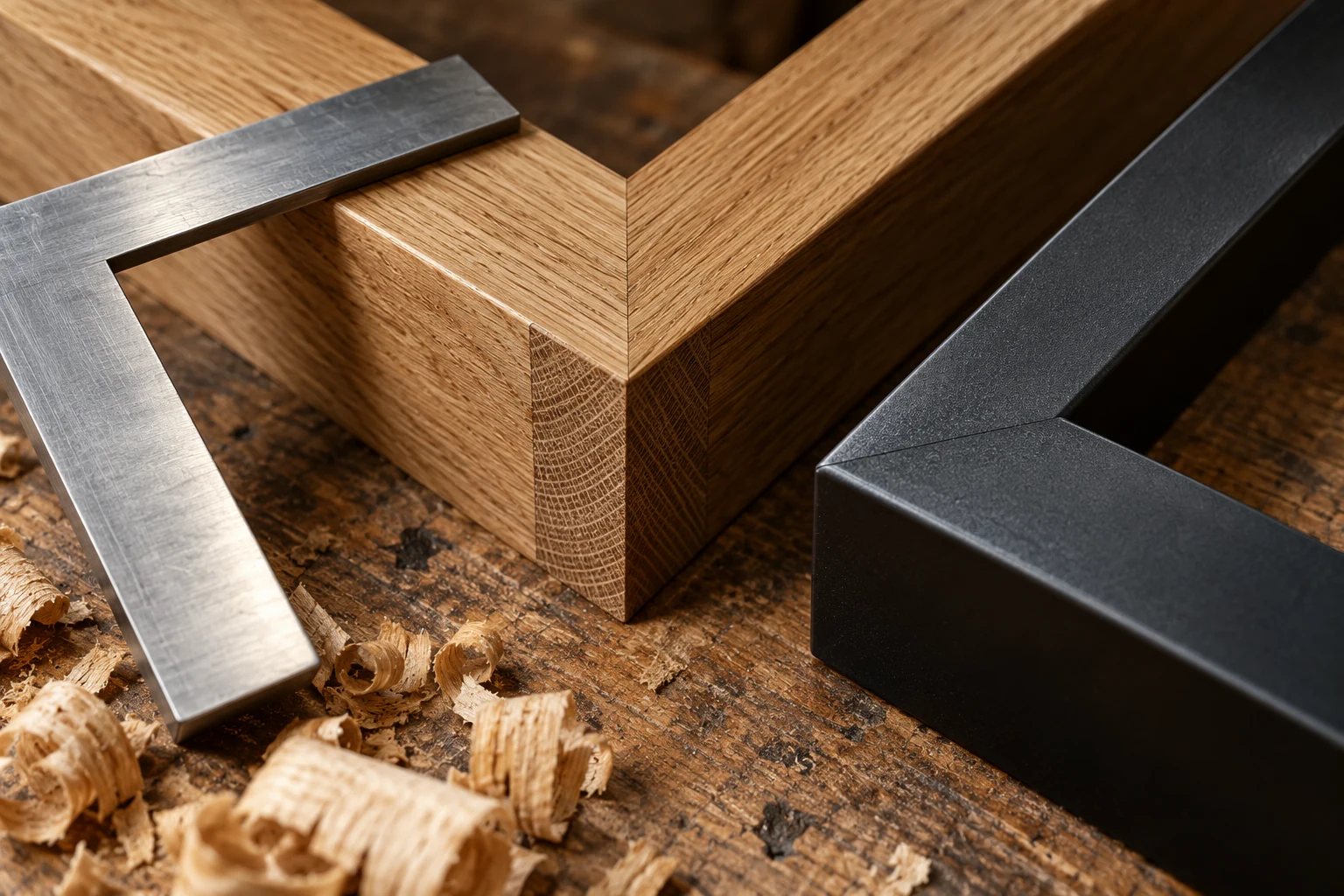
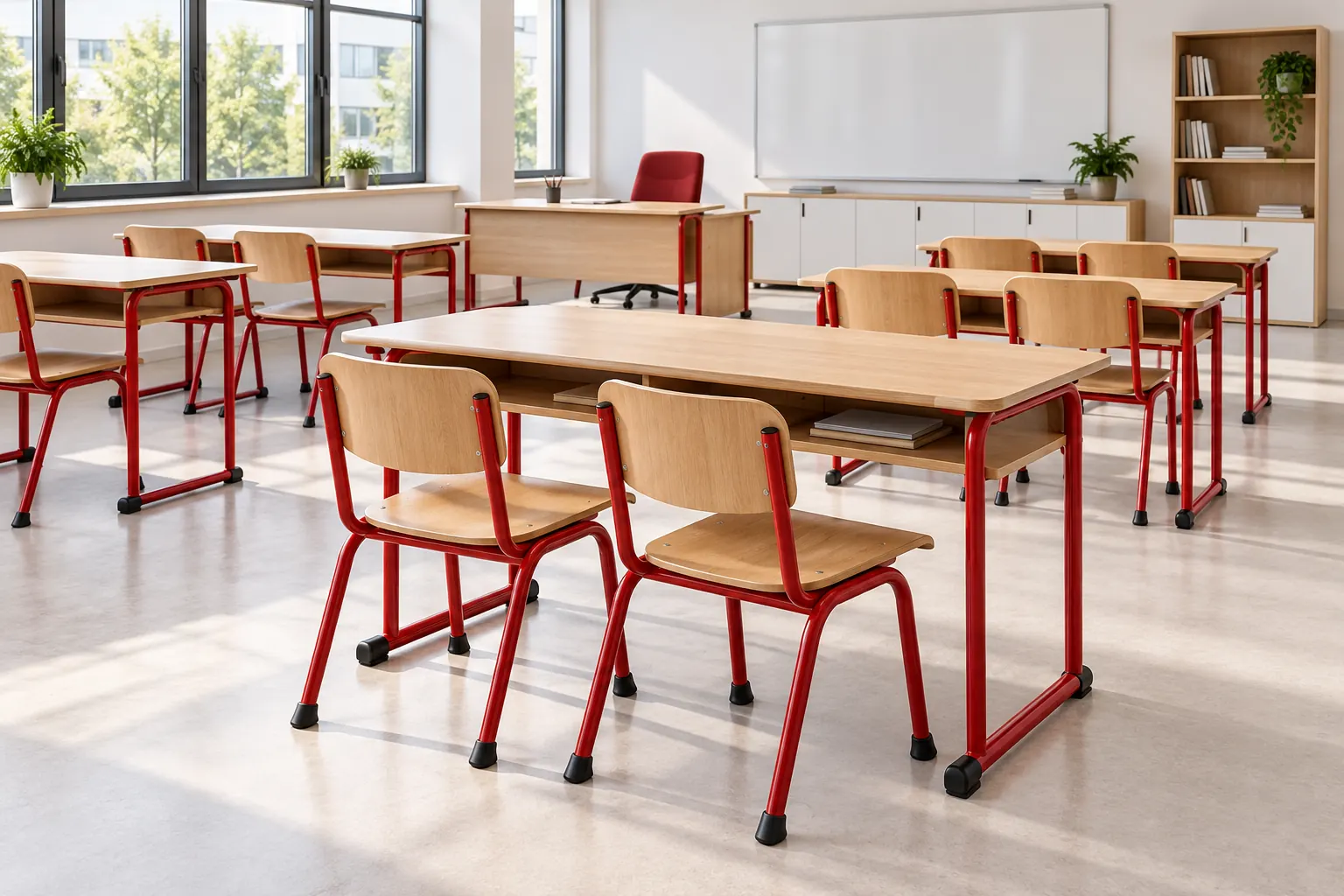
Combining a steel tube frame with timber or plywood tops and seats is one of the most common approaches in school furniture, for good reason: steel provides robustness and stability, while timber is comfortable to the touch and can be repaired or replaced.
- Powder-coated steel tube;
- Plywood or heavy-duty faced-panel tops;
- Leg caps to protect the floor and reduce noise;
- Bolted connections that allow parts to be replaced.
Safety in daily use
Rounded edges, no pinch points, stability against tipping and splinter-free finishes. In classrooms with young children, these details are not optional.
Maintenance and replacement
Choose models whose components can be replaced individually: a scratched top or a worn leg cap should not mean replacing the whole desk. A supplier that keeps the same model available lets you replace parts and equip additional classrooms over the years.
Planning the supply
State the number of classrooms and pupils per class, the age groups, the additional spaces (library, laboratory, canteen, staff room) and the school calendar. Supplying and installing outside term time is often the best option.